Monday, 2 November 2015

9 Lessons To Learn When You Are An Entrepreneur


9 Lessons To Learn When You Are An Entrepreneur

Being an entrepreneur is not a spectator sport. Nor is it for the faint of heart. But mix a little bit of passion with a fair amount of planning, and a business can grow up to be anything you want it to be.
Here are nine lessons you should learn on the road to creating a company that suits your life.

1. Know what you want


Photo credit :Rob Best 
2009 SAGE World Cup Wining Project -SAGE Team from JSS Jikwoyi Abuja making a business presentation at the 2009 SAGE World Cup in Brasilia Brazil.
Is it your desire to be the king of your own empire or do you simply want the freedom to spend afternoons with your children? Maybe you want something in between? I often hear from entrepreneurs who want a business that allows them to send their kids to college one day and then support their retirement. They want to be able to conduct business wherever they are. They want to create a product or service they love. That’s good motivation since the hours you spend on your business will likely far exceed anything you ever did at your desk job. Your motivation has to be big enough to overcome the challenges ahead.  

2. Listen more than you speak  

Relationships matter, and networking events are a great way to make that connection. They’re also a great place to meet potential clients, although not everyone gets the memo on how to network successfully. Events such as these are not business card drops, but timed learning opportunities. Introduce yourself to a new person and ask questions until you find some common ground. If you listen more than you speak, the chances are greater you’ll hear when you are able to offer a true solution to problems.

3. Wrap them up in a hug  

Everyone is online. We’re all staring into screens, typing or texting away, disjointed and distracted. But if you find a way to bring people together, whether it’s online or on your street, they won’t ever forget it. Give them what they want, whether it’s knowledge, acceptance, humor. People are searching for a way to connect with others, because in those smaller venues, they have a greater chance of being heard.

4. Get proof

People will spend good money on things they value. If you’re new in business, though, it may be a tough sell, so get proof that you are as good as you say you are. I interviewed an architect a few months ago who today has a million-dollar business. But when he started, he had exactly one client- a mother he knew from one of his children’s sports team. That one client gave him referral after referral and it helped his business take off. Relationships matter, but you still have to do the work.

POP and Chalk production by SAGE Team JSS Jikowyi Abuja at the 2009 SAGE World Cup ,Brasilia ,Brazil .

Get social
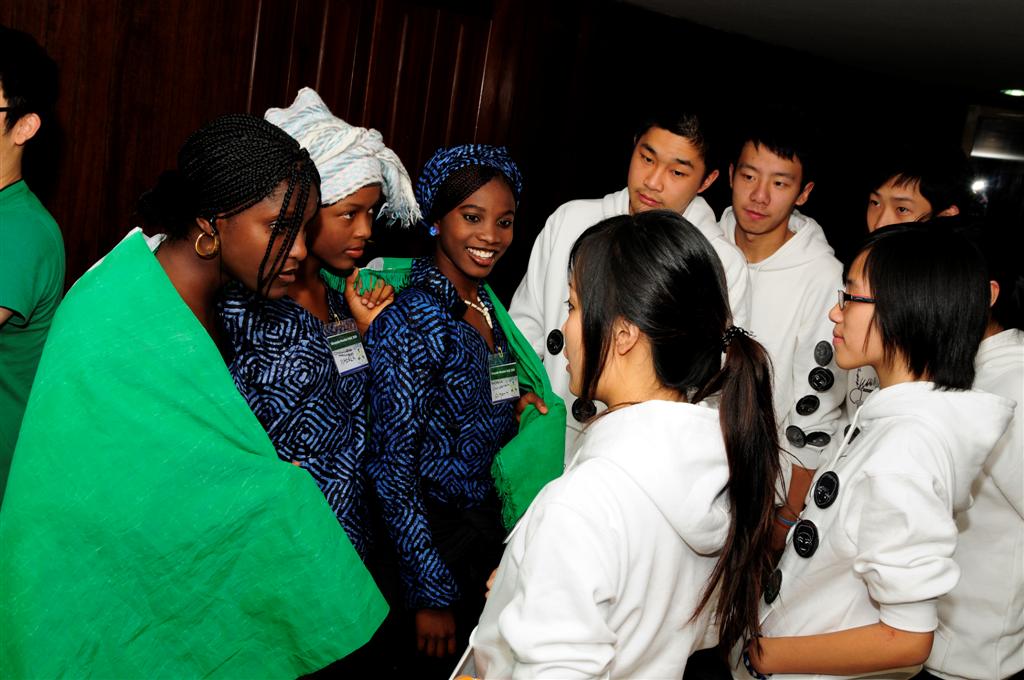
SAGE Teams networking 

The other day my son wanted to install a server on my computer. I immediately got concerned. Will it compromise my computer? Will I lose everything on my hard drive? Why is this necessary? But my son told me I had nothing to worry about. He had checked reviews, done oodles of research and made sure he knew everything he needed to know about servers. Where did he get that information? On the internet. Did I mention he is 10 years old? Millennials and those behind them will go to the internet for answers before they do anything else. They want to see reviews and testimonials with their own eyes. And they’re not afraid to dig to get the information they want. That means they’re trying to see if your product or service is worth their time and money. So it’s important you’re there to answer those questions. That means having a website, a social media presence, and this is critical, engagement with customers on social media.

6. Say what you’ll do, do what you say
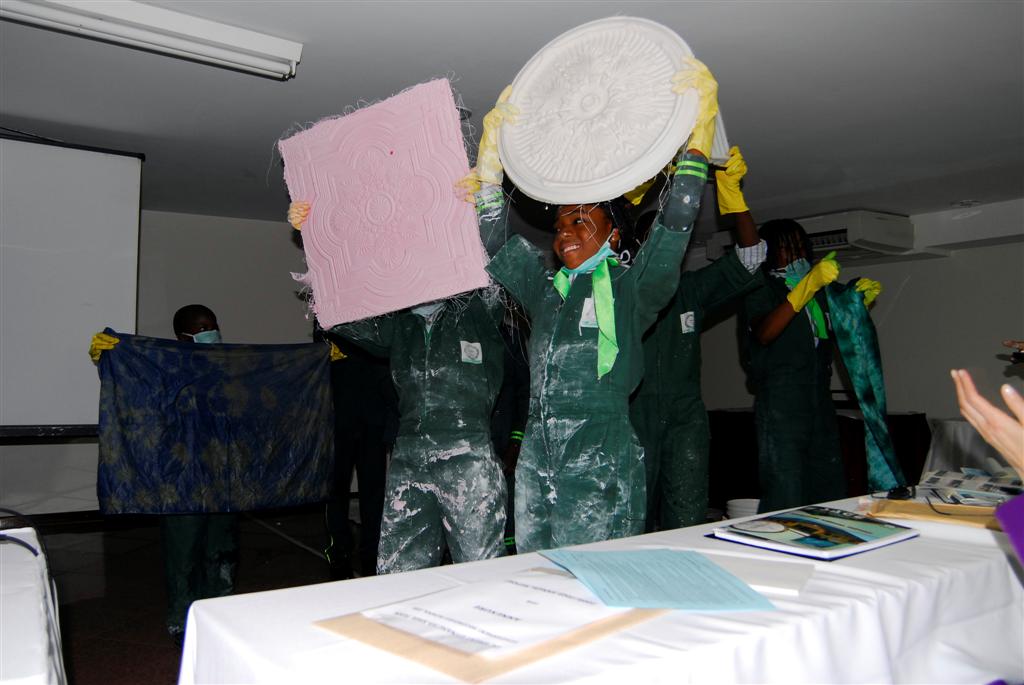

Photo credit :Rob Best 

2009 SAGE World Cup Wining Project -SAGE Team from JSS Jikwoyi Abuja making a business presentation at the 2009 SAGE World Cup in Brasilia Brazil.
No matter how old a customer is, this one thing stands the test of time. Simply do what you say you’re going to do. It’s what separates mediocre businesses from great companies. Talk to any consumer. Ask them about any company, and they’ll have an opinion about the product or service it offers. Chances are, the response you get will relate directly to whether they promptly received what was promised.

7. Keep your eyes on your own paper

Every time I watch Shark Tank, I think about something I can quickly sew, mold or craft to make a million dollars. It’s inspiring. It’s deflating. So often we take what’s happening around us and we allow it to weigh on us. We analyze, we agonize, and then, we don’t move forward. The only thing you have control over is you. And that means getting to work. Don’t worry about what’s happening with another entrepreneur or another company. You can only worry about you. So get to it!

8. Start small and grow big

I had a client once who wanted to be on the Today Show. She had never been in the media before. It’s not to say it can’t happen, but if you’re hoping to be seen as an expert, it’s important you are seen as an expert somewhere else before you take the national stage. Start small. Begin booking appearances in your local newspaper, on TV, or on the radio. Then work your way up. The same holds true for business. In general, test your idea in your circle and listen for the reaction. If there’s traction, follow it as far as it goes.

9. Don’t give up


Photo Credit :Rob Best

An accredited Judge at the 2009 SAGE Word Cup ,Brasilia ,Brazil 
Too many people let fear and failure stand in the way. I get it completely. Entrepreneurship can be scary. But it’s important to keep going. My dad swore up and down he would not get a laptop 7 years ago. He’s pretty stubborn, but 7 years ago, my brother and I bought him his first one. And now he can’t live without it. He’s also on Facebook. A lot. People change. If you can show them the value, they’ll be happy to try something new.
That’s it. Nine lessons to learn when you’re an entrepreneur. Learn them well, as they come in handy not only in business, but in life.
What lessons would you add to the list? Please post them in the comments below.

Article by:Founder, CherylTanMedia.com

Thursday, 29 October 2015

HAVE YOU FINISHED YOUR APPLICATION FOR THE GLOBAL TEACHER PRIZE ?


About The Global Teacher Prize

The Global Teacher Prize is a one million dollar award that is given to an exceptional teacher who has made an outstanding contribution to the profession.
The Varkey Foundation launched the Global Teacher Prize in 2014 to raise the stature of the teaching profession. We seek to celebrate the best teachers — those who inspire their students and community around them. The Foundation believes that vibrant education awakens and supports the full potential of young people. The status of teachers in our cultures is key to our global future.
The award — the ‘Nobel Prize’ of teaching — operates under the patronage of His Highness Sheikh Mohammed bin Rashid Al Maktoum, UAE Vice President, Prime Minister, and Ruler of Dubai.
The Prize underlines the importance of the teaching profession and symbolizes the fact that teachers throughout the world deserve to be recognised and celebrated.
There were over 5,000 nominations and applications from 127 countries for the inaugural year of the Global Teacher Prize which generated a huge amount of media interest around the world.
At the Global Education and Skills Forum 2015, USA educator Nancie Atwell was announced as the winner from the Top 10 outstanding finalists.

For more information click
http://bit.ly/1GBVx9R
http://www.globalteacherprize.org/about

Let's transform our children from those who have nothing to lose into those who have something to lose.


THE FUTURE FOR NIGERIA :
I was a witness to yesterday's carnage in Yola; I wasn't at the scene of the incident but I've attended to the victims in hospital. The big question on my mind, of course, is how did we get here? How did we end up with the situation where there is an endless supply of children ready to detonate bombs and kill themselves and others? Why are so many children not on "our side" but on the terrorists' side?
I know that children often do not decide on their own but are instructed by adults. But what made the adults themselves to easily buy into the idea? I don't think this is religious conviction. I believe the problem is that we have a whole bunch of people who are so alienated from whatever the modern world has to offer that they have nothing to lose. I believe that the gap between leaders and the led has reached its widest level ever in the history of our nation such that the two now live in two completely separate worlds. For leaders, life is about the government house, the entourage of hangers-on and spin doctors, chartered flights, homes in Abuja and Dubai, Hajj and Umrah, foreign schools for the kids, childbirth in the US and medical check-up in London. For the led, life is about a meager existence, too many mouths to feed, dilapidated primary and secondary schools, near-impossible university admission etc. The two worlds hardly ever meet except at campaigns rallies where a tiny amount of ill-gotten wealth is thrown at the masses. The poor are hungry, ignorant, alienated, disillusioned, frustrated and desperate - and they are hitting back!
In the past, there was a reasonable connection between leaders and the led. Leaders used to visit schools to speak with pupils and teachers; food, books, uniforms, toiletries were given almost free. Traditional rulers used to visit schools to chat with kids and give them oranges. On Childrens Day and October 1, children would wear sparkling uniforms and go for a march past in front of the governor. School sports competitions may be attended by a top government official. All these are now gone. Nobody bothers about "small things" any more. For leaders, there is so much money to be made and so many wonderful trips to undertake. Mingling with the poor is even "risky" these days.
What do we need to do? We need to inject a lot of soft power in the fight against boko haram - not in the form of some misguided "negotiations" with terrorists but in the way of closing the gap between leaders and the led. Leaders need to win back the faith of the masses. We need a back-to-basics campaign combined with anti-corruption and anti-boko haram propaganda.
A visit to public schools in Adamawa state is enough to convince anyone that normal life has indeed been strangulated long ago and children have nothing left to do other than to carry bombs. We are paying a heavy price for our decades-long mistakes, for the greed, avarice and thoughtlessness of our leaders. Our very survival is hanging in the balance. We must retrace our steps and we must start now
Picture: FCT SAGE Team Students weaving school sweaters as one of their annual  business project.
  
Let's transform our children from those who have nothing to lose into those who have something to lose. Let's give them education and hope in life such that no one can convince them to carry a bomb. Let's bring them firmly to our side such that they will even call the police if someone asks them to carry a bomb.

Written by :Dr Raji Bello 

Tuesday, 27 October 2015

Projects at the 2015 SAGE National Exhibition and Awards.

WIBITECH Winners SAGE Team –Winners International School ,Nkpo ,Anambra State: WIBITECH Bio-gas Plant

WIBITECH is a bio-gas plant which can generate bio –gas for cooking and bio-fertilizer form disposable waste from their community.
Bio-gas project was created to help improve healthy leaving, Improve electricity, create employment and reduce global warming in their community.
The team collected cow dung from slaughter houses and food waste from different households, schools, local food joints which serves as raw waste material to produce gas .


The WIBITECH team emerged the 2nd Runner Up at the 2015 SAGE National Exhibition and Awards.


Creative Brains SAGE Team –Government Secondary School,Garki,Abuja

Project :BEE Keeping
To the teams greatest surprise, They found out in every 100 patient, 20 were suffering from diabetics and5 being young, showing the high rate of diabetics in the world of today. The team decided to go into the production of a new brand of honey gotten from the combination of two botanical origins into a unique blend that has dark amber colour .
The team took a blood sugar level test on members of their school both teachers and students, before and after the administration of their honey, after 5week a test was conducted, they found out that for those who had elevated blood sugar level, a slight reduction was noticed and those with normal sugar level it was found out their sugar level remained constant.
Presently their honey is recommended by pharmacists and doctors from various hospitals so that patients can have access to high quality natural honey and also found in shops. The team secured the 1st Runner Up position at the competition.


The Craft House SAGE Team –University of Calabar International Demonstration Secondary School ,Calabar.

Project :CAL –BIOFUEL


Harmful gases which includes fossil fuel burning and deforestation is one of the major causes that gives an upwards push for the amount of green house gases in the atmosphere causing global warming contributing to health problems.
The SAGE Team saw an immediate need for an alternative eco –friendly fuel, thus embarked on the production of biodiesel utilizing waste cooking oil sin their community which was branded CAL-BIOFUEL ,with the advantages of been safe to produce ,low toxicity and high bio-degradability etc.

The team created a cooking oil collection programme Tagged “Drops of Life “through this programme an environmental awareness was created to highlight the importance of used cooking oil recycling instead of disposing them indiscriminately.
As a sign of massive improvement, the venture has currently attracted numerous interested costumers and members of the Drop of Life “Programme. The Craft House SAGE team won the 1st Position in the Social Enterprise Business category of the competition which gave them the ticket to represent the country at the 2015 SAGE World Cup in Seoul, South Korea, where they faced teams from China, Russia, Kazakhstan, USA, Philippines etc.


Monday, 26 October 2015

Things You Didn’t Know About Africa’s Richest Female Billionaire Isabel dos Santos

Isabel dos Santos, oldest daughter of Angolan President José Eduardo dos Santos, has amassed a fortune of more than $3 billion USD, making her the richest woman in Africa. With investments in a wide array of sectors, dos Santos has long been a controversial figure. Her wealth is far and beyond the imagination of most Angolans, where the average wages are less than $2 USD per day. Here are 12 things you didn’t know about Africa’s only female billionaire, Angolan billionaire Isabel dos Santos.
Isabel dos Santos is the daughter of President dos Santos and his first wife, Tatiana Kukanova, a Russian chess champion
Isabel dos Santos was born in Baku, Azerbaijan, where her parents were both studying engineering at the time. She grew up as the war for independence between Angola and its colonial ruler, Portugal, came to a head. Even after her father became president in 1979, she spent some time in a state school in Luanda before moving to London to live with her mother after her parents separated. She attended school there
Selling chicken eggs at age 6 was her first foray into business
Growing up, Isabel was always business-minded, first selling chicken eggs at age of six to feed her candy-floss (cotton candy) habit. She also set up a garbage collection business at a young age that never went anywhere, but allowed her to learn from the failed venture and hone her business sense.
She is Africa’s youngest billionaire
In addition to being the first and only billionaire in Africa, Isabel is also the continent’s youngest billionaire. Born in 1973, she is just 41 years old. She is often referred to derisively as “the princess” due to her rich upbringing in the presidential palace and subsequent success in the business world.
Her first investment was in a beachside bar and restaurant in Luanda
In 1997, the owner of Miami Beach, a run-down bar-restaurant in Luanda brought Isabel in as an investor. Though her initial investment was fairly minimal, the gravitas associated with her name helped the bar deal with government regulators that were after the bar over health and tax issues.
Isabel’s wedding cost an estimated $4 million USD
In 2003, dos Santos wed Congolese art collector Sindika Dokolo – and son of banking tycoon Sanu Dokolo – in an extravagant ceremony. There were rumors that a choir from Belgium was flown in for the event, and several African presidents were at the elaborate affair with more than 100 guests.
She has homes in four countries
Partially due to her diverse business interests, and in part thanks to the international nature of her family, Isabel and her husband have homes in Luanda, London, Lisbon, and Johannesburg. She also speaks several languages, though leaves all of her dealings with the media to spokespeople, preferring to maintain a low personal profile.
She has a 25% stake in Unitel, Angola’s first private mobile phone operator
In 1999, President Dos Santos and his government granted Unitel the rights to be the first private mobile telephone operator in Angola, and maintained the power to approve projects and direct the shareholding structure of the company. Isabel emerged from the deal with a 25-percent stake in Unitel. She said she invested her own capital. It remains unclear how much the initial investment was. Today, Unitel is Angola’s largest private company with annual revenue of more than $2 billion USD, and Isabel’s share is about $1 billion USD.
Dos Santos is the biggest shareholder in Portuguese media conglomerate, Zon
Dos Santos owns 28.8-percent of Zon, a Portuguese media conglomerate. Her investment is valued at more than $385 million USD. She is also a major controller in several other Portuguese companies including Banco BPI, in which she controls 19.5-percent of stock, valued at $465 million USD. She has been making moves to buy the majority stake in Portugal Telecom, a company that owns more than a quarter of Brazilian telecom operator Oi.
She has been celebrated by state-run media outlets, such as Jornal de Angola
In 2012, the state-owned newspaper Jornal de Angola awarded Isabel the title Entrepreneur of the Year, and for years has been on a positive-spin campaign on her behalf. After Forbes Magazine publicly declared dos Santos a billionaire, the Jornal wrote, “While we give out best for Angola without poverty, we are elated with the fact that businesswoman Isabel dos Santos has become a reference in the world of finances. This is good for Angola and it fills Angolans with pride.”
Isabel sees her role in Angola as opportunity creator
Despite criticism that her vast wealth is at odds with the majority of Angolans who live below the poverty line, Isabel points to the fact that the middle class is growing, and she says poverty is lessening in her country as a direct result of the improving economy. “How do you get inequality lower? Well, by creating opportunities and creating more and more development,” she said. “You wake up in the morning and work, do something. It will take a lot of time but the more things happen, the more things are built.”

HOW TO USE SOCIAL MEDIA, ESPECIALLY FACEBOOK, TO MEASURE THE ENTREPRENEURIAL QUOTIENT OF NIGERIANS


“We cannot gloss over facts and expect problems to solve themselves.” –Ahmadu Bello.
The fact staring us in the face in this country is that a large percentage of our citizens are unemployed and looking for non-existent jobs. Another sad fact staring us in the face is that no nation can rise to economic greatness where able bodied citizens are idle and doing nothing. And the saddest of all the facts is that we will never get out of this mess with how the system works.
We have a system that churn out graduates who don’t know jack about starting a business or creating value. They come out brandishing a piece of paper called a certificate expecting a job from the government and everyone; they have this attitude of “expectational arrogance”. They are graduates, they have finished their NYSC, and so somebody must owe them a job. How sad.
Most Nigerians never think of creating a job and employing others. They don’t believe in further training or acquiring a new skill that will help them start out on their own. For them once they are done with formal schooling they deserve a job. Well, maybe they do deserve a job, but the best way to get a job in Nigeria is to create one. Even those doing some sort of business are never satisfied until they get a “job”. I met a cab driver in Abuja who makes more money than a bank teller monthly but he was still begging for a job. As far as he is concerned he must wake up every morning and go to a place called a “job” before he is satisfied. This is our general attitude with just a few exceptions.
Granted that our educational system doesn’t prepare us to be entrepreneurs, but once we are out of school we ought to take responsibility for our thoughts and our actions. The system prepares you to be broke but your attitude will keep you broke. Take charge of your attitude. Attend a training, hone your talents, acquire a skill, get business mentoring and start out on your own. It is really sad to see Nigerians work for years in a bank without learning how to start and run a bank, this also goes for those working in hotels, schools, NGOs, etc. what matters to them is to take peanuts home every month.
While I was working as the Programs Manager of a top NGO in Nigeria I noticed that my secretary never bothered understanding all the concept notes and proposals I was giving her to type, she didn’t bother to inquire how we raised money and engaged our donors, she didn’t bother to know how we executed and evaluated projects. When I asked her why, she said it didn’t occur to her. But she didn’t change. One day when I couldn’t take it any longer I fired her. I don’t like such folks around me, they poison my work atmosphere.
One of the best ways to measure this attitude of Nigerians is on social media, especially Facebook. You can try it. Write anything about business or a business training, you will get no comments, no questions and just a couple of “likes”. Nigerian youths hardly engage you on any post that has to do with entrepreneurship. They don’t want to create value, they don’t want to learn anything about starting a business. They want someone to give them a job, job, job, job…
Do another test. Just post about a job opening anywhere even in a Filling Station and see the number of comments and inbox messages you will get. Infact the easiest way to scam a Nigerian is to tell him about a job offer. Nigerians spend more money in bribes trying to get a job than they spend in acquiring skills and knowledge needed to start and run a profitable business. You will see 1 million Nigerians applying for just 10 spots in a company and it beats me hollow to imagine that none of those Nigerians are thinking about starting a company like the one they are applying to. Rather they will give you a thousand reasons why they can’t do it, forgetting that the company they are applying to succeeded inspite of those reasons.
Nigerians also love fast money. I also like to make fast money but it’s just that most avenues promoted online for this fast money making are fake. Have you seen this craze about “click on this link, register and share with your friends and make $100 daily for doing nothing! Click now”? And you will see graduates clicking and sharing it on their wall. If you share a link about a training or a course on how to acquire a skill to start a business those same folks will not click it.
Nigerians also love magic and miracles. Just post a picture of a top man of God like Enoch Adeboye or David Oyedepo and write a short post like this: “I declare that all the witches in your village preventing you from getting a job will die by fire before Monday next week. Click ‘Like’ and type ‘Amen’ to claim it!” I bet you my laptop you will get nothing less than 1000 ‘likes’ and comments. But if you write an article about business, my brother nobody go answer you o. They want magic not education. Personally I’m still looking for that Bible verse that say you must type ‘Amen’ on a Facebook post to get a job or be blessed.
I call on all young Nigerians to break this jinx upon our generation, this jinx placed on us by culture and our educational system. Let’s break this vicious circle of poverty. Let’s change our attitude and watch our lives change. Change your perspective, be open to new knowledge and insights, attend trainings, get a mentor, and transform your talents and skills into businesses. Let’s change our story and that of Nigeria and Africa. The future depend on you.

Written by :First Baba Isa 
Like   Comment   
Comments
Chinenye Udeh

Write a comment...

ATTENTION!!!!!! SAGE TEAMS AROUND THE WORLD


ATTENTION SAGE Family  from far and wide !!!!!!!

 Enter our Social Media Sweepstakes for a chance to win a brand new HP Laptop for your team! All you have to do is email us at compete@sageglobal.org with links to your Facebook, Twitter, and Instagram. Gain the most follows/likes in a month period and you win! 

Enrollment for the sweepstakes ends Nov. 6 at 11:59 pm PST,

So what are you waiting for? Enter today! #sageglobal#entrepreneurs #win